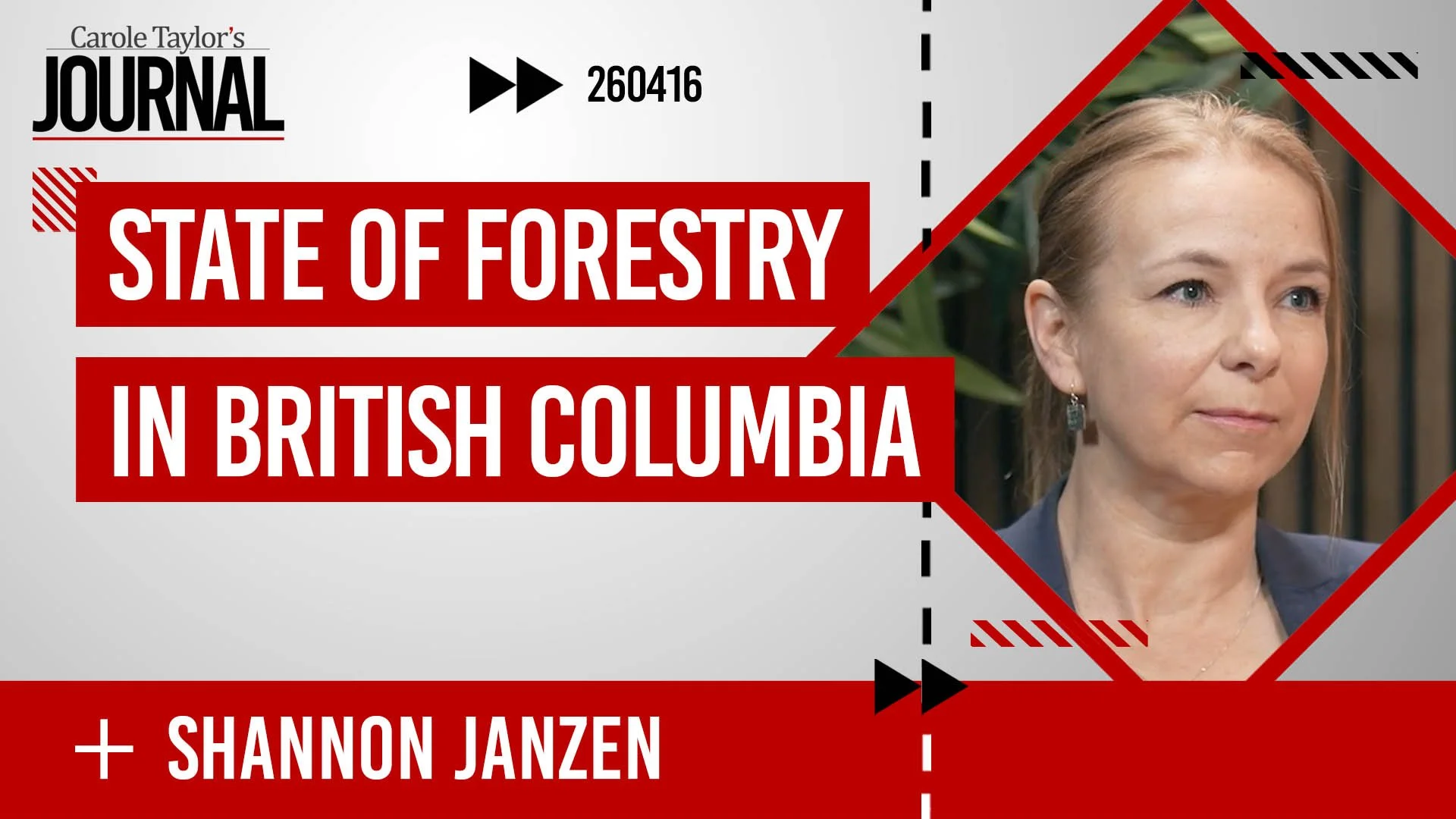
State of Forestry in British Columbia
Guest: Shannon Janzen
On this edition of Journal: a closer look at the recently released forestry report that says we have to abandon the old ways of managing our forests because the status quo is not working.
That statement won’t be a surprise to anyone touched by this industry, be it municipalities, First Nations, the provincial government, or the workers and their families. More than two dozen mills have closed in the past four years, laying off more than 8,000 workers. Many companies have decided to do their capital investments elsewhere, in the US or Europe, but not in British Columbia.
The report called, “From Conflict to Care,” acknowledges that currently in forestry, “we have a complex system of legislation that is hard to comprehend, combined with bureaucratic inefficiencies such as Ministries working in silos and sometimes at cross purposes with opposing mandates. Adding to this challenge is the instability caused by election cycles which drive frequent shifts in priorities and mandates.”
That brutal assessment is not from opposition literature – it is taken word-for-word from this new report compiled by the Provincial Forestry Advisory Council done for the BC government. One of the chairs, Garry Merkel, calls it “another freakin’ review of BC forest policy.”
So, the table is set:
What can be done to save this important resource industry that used to be such a major player in our province?
Shannon Janzen, Merkel’s co-chair, a forester, and former vice-president of Western Forest Products, believes there is a way. First of all, we must accept the status quo is broken; then, after broad consultations, come up with a radical new model that works in 2026.
Enjoy this episode via podcast or YouTube: